About · Sudanese non-profit civil society organization

A new democratic and resilient civil society

The New Civil Society Development Institute (NCSDI) is a Sudanese non-governmental, non-profit organization that began in 2021 as a small youth initiative in Tawila locality, North Darfur. We build strong institutions that empower young women and men, equipping them with the knowledge and skills to advocate for their rights, to promote freedom, peace and justice and secure a sustainable democratic future. Our approach is participatory, rights-based and evidence-based.

NCSDI at a glance
Began
Youth initiative in Tawila, North Darfur · 2021
Registered
Uganda · mid-2024
Where we work
Sudan, Uganda, and any country that permits Sudanese civil society activities
Network
Humanitarian Responders Protection Network in all five Darfur states
We work with
Youth civil actorsYouth organizations and initiativesWomen’s organizations and initiativesIDPs and refugees
2021
started as a youth initiative in Tawila
160+
humanitarian responders consulted for the protection manual
73
responders trained in community cohesion and conflict transformation
31
localities across the five Darfur states
300+
civil actors mapped in Darfur
12
research papers from the Community Cohesion Award
Our story

From an initiative in Tawila to a network across five states

NCSDI began as a youth initiative to address social and economic challenges in Tawila locality. We trained Tawila youth in strategic planning, team management, proposal writing, negotiation and communication, and worked with the Economic and Social Research Bureau in Khartoum to assess development indicators and build a demography-based plan for peace and development, as a pilot for the Darfur region. We also gave technical support to other NGOs and initiatives: websites, profiles, and using technology to grow their impact.

The April 15, 2023 war stopped our work in Tawila, and some members were forced to leave for Uganda, where the initiative was officially registered in mid-2024. From Kampala we launched the Darfur Civil Society Consultations Program, to promote dialogue among civil actors, identify intervention priorities during and after the war, and align national and international interventions with the priorities of Darfur’s communities.

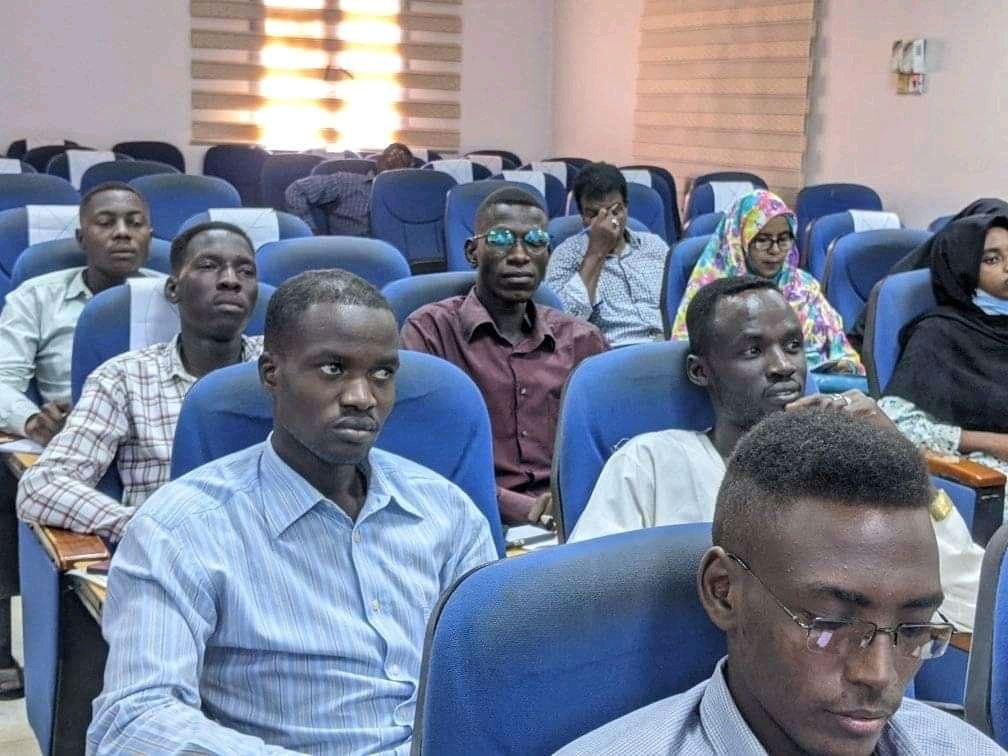
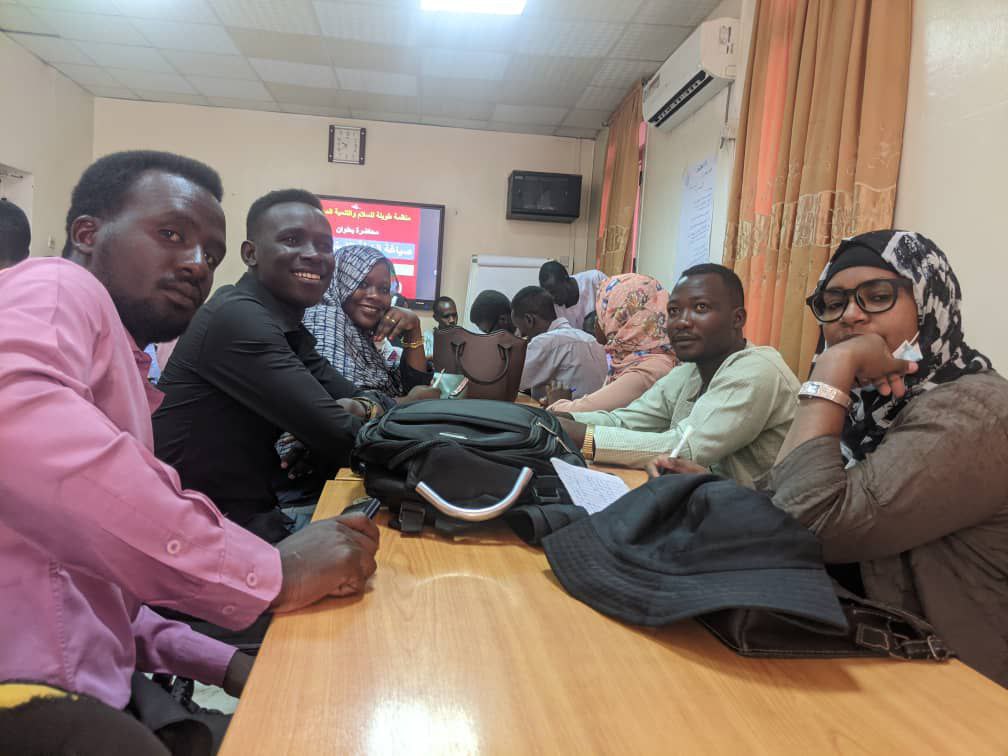
From the knowledge-building workshops, Kampala, 2024
  1. 2021
    The initiative begins in TawilaTraining Tawila youth in strategic planning, team management, proposal writing, negotiation and communication.
  2. 2021 – 2022
    Capacity building for 50 young people from DarfurA programme in Khartoum on strategic and team management and employability skills.
  3. 2022
    Development indicators assessment in TawilaWith the Economic and Social Research Bureau; stopped by the war.
  4. April 2023
    The warPart of the team was forced to relocate to Uganda.
  5. Mid-2024
    Official registrationThe initiative registered in Uganda as the New Civil Society Development Institute.
  6. June 2024
    Knowledge-building workshops40 civil actors from the five Darfur states, in Kampala.
  7. July 2024
    Darfur Civil Society ConsultationsAround 300 civil actors mapped and over 60 meetings with ERR and CSO leaders.
  8. July 2025
    Protection manual and networkLaunch of the Manual on Protecting Humanitarian Responders on July 14, with the Humanitarian Responders Protection Network.
  9. December 2025
    Lead partner for DarfurNCSDI selected as lead partner for the Darfur region in an international civil-society programme.
  10. January – April 2026
    Cohesion Award and trainingLaunch of the Darfur Community Cohesion Award, and training for 73 responders from 31 localities.
  11. June 2026
    Darfur 2030 strategy and the magazineLaunch of the strategy and the first issue of the Darfur Context and Visions Magazine on June 27.
  12. August 2026
    First Darfur Recovery Fund grantsThree grassroots initiatives in South, Central and East Darfur.
  13. Now
    Mediation and Conflict Transformation FellowshipPlanned to build the capacity of 4,000 community facilitators across Sudan’s 18 states, 1,000 of them in Darfur.
Our vision
A new democratic and resilient civil society
Our mission
Building strong institutions to promote peace, justice and reconstruction
Our values
  • Voluntarism
  • Transparency
  • Credibility
  • Integrity
  • Loyalty
  • Justice

What we believe

The right to dignity and opportunity Every individual has the right to decent work, quality education, and access to opportunities that enable them to thrive.
Gender equality and social inclusion Equal opportunities must be guaranteed for all, regardless of gender, age, ethnicity, socioeconomic status, culture, or religion.
Empowering youth for development Rural and marginalized youth, including displaced persons and refugees, can actively contribute to humanitarian efforts, peacebuilding, and social progress.
Community-led initiatives Sustainable development and conflict resolution are best achieved when communities take ownership of their own initiatives.
Fundamental freedoms Upholding freedom of expression, movement, and choice for all is essential to democracy, human rights, and social justice.
Strategic priorities

Seven areas of work

Our priorities align with the Sustainable Development Goals most relevant to Sudan, and underpin our five-year strategic plan (2025–2030) and annual operational plans.

01

Advocate for young women’s rights

We give young female actors knowledge of their entitlements and the tools to advocate for their causes.

02

Build youth knowledge and organizational capacity

Awareness and capacity-building programmes so young people can act to stop the war, provide relief, rebuild, and promote democracy and human rights.

03

Include displaced and refugee youth

We strengthen their voices and their active participation in decisions that affect their lives.

04

Peacebuilding and community cohesion

Dialogue, reconciliation, community-driven solutions to conflict, and stronger trust between local communities.

05

Protect civil and humanitarian actors

We advocate for the protection of mutual aid groups, civil society actors, and humanitarian personnel, so they can operate safely and effectively.

06

Localize humanitarian aid

We promote locally led responses that let affected communities drive their own recovery and development.

07

Evidence-based interventions

We conduct research and generate evidence to inform policy and strengthen the new civil society.

Target groups
Youth civil actorsYouth organizations and initiativesWomen’s organizations and initiativesIDPs and refugees
Geographical coverage Sudan, Uganda, and any other country that permits Sudanese civil society activities. Exact locations are set in the annual operational plans.
How we work

On three levels at once

We adapt John Paul Lederach’s levels of action to promote a just peace in Sudan, engaging top, middle-range, and grassroots leaders together.

1International and top leadership
  • We are engaging the Global Protection Cluster to advocate for a new Area of Responsibility and a dedicated strategy on humanitarian responders’ protection, based on the ten pillars of the protection manual.
  • We advocate for including Emergency Response Room volunteers in international protection mechanisms by recognizing them as part of the UN Volunteers, and have met relevant UN agencies on this.
  • A media advocacy project telling refugees’ stories, with a focus on young women and persons with disability.
2Middle-range leadership
  • We have mapped over 300 civil society coalitions, NGO leaders, academics, and Native Administration leaders, and held consultative meetings with 60 of them.
  • Problem-solving workshops identified three long-term priorities for civil society in Darfur: social justice, human rights, and efficient governance institutions.
  • We are preparing workshops with Darfur civil society coalitions to assess and expand the impact of their protection and cohesion work.
3Grassroots leadership
  • Introductory sessions on the protection manual for local Emergency Rooms and youth initiatives.
  • We work with the protection departments of the ERR Coordination Councils in Darfur on strategies to protect responders, restore essential services, and localize aid.
  • The Humanitarian Responders Protection Network is present in Nyala, El Fasher, El Geneina, El Daein, and Zalingei.
Projects

What we have delivered and joined

ImplementedDecember 2025 – August 202631 localities in the five Darfur states

Empowering Youth and Women Initiatives to Build Local Conflict Resolution and Community Cohesion Mechanisms

A wide-scale training programme on community cohesion and conflict transformation, the first Darfur Recovery Fund grants, and the Darfur Community Cohesion Award. It produced 15 knowledge products: the Darfur 2030 strategy, 12 research papers, a peacebuilding training manual, and the first issue of the Darfur Context and Visions Magazine.

73
responders trained
75%
knowledge gain
12
research papers
ImplementedFebruary – June 2025Nyala · El Fasher · El Geneina · El Daein · Zalingei

Darfur Civil Society Consultations to Develop a Peer-to-Peer Network and Best Practices in Security, Peace, and Conflict Resolution

To enhance the safety and effectiveness of ERR volunteers and mutual aid groups. On July 14, 2025 we launched the Manual on Protecting Humanitarian Responders and Strengthening Their Role in Conflict Resolution and Peacebuilding, the outcome of six months of consultations, alongside the Humanitarian Responders Protection Network.

160+
responders
20
in-depth interviews
5
states
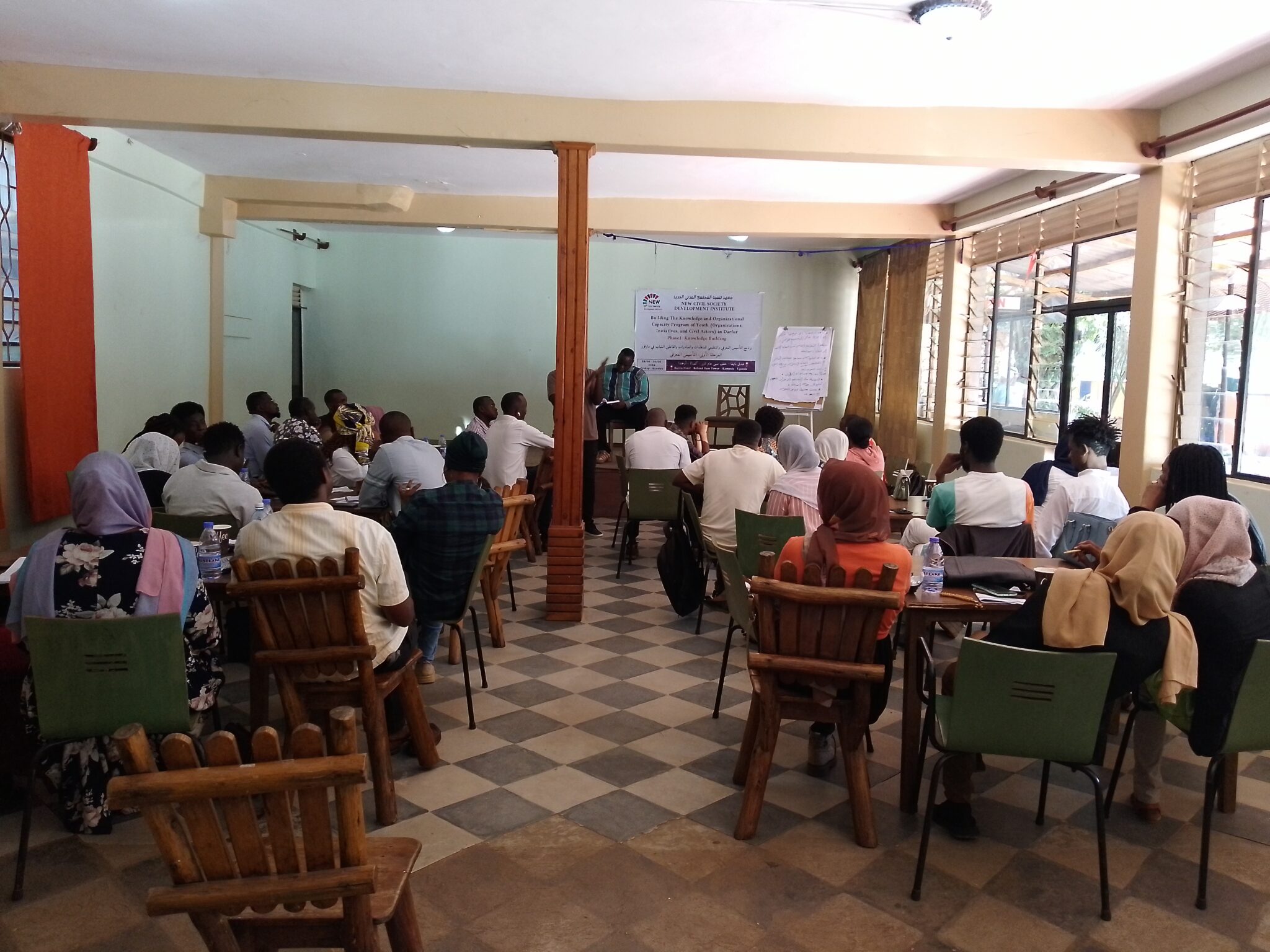
Knowledge-building workshops, Kampala, June 2024
Implemented28 – 30 June 2024Kampala, Uganda

Knowledge-building workshops for youth civil actors, organizations, and initiatives in Darfur

Three days on human rights, resilience, the rights-based approach, context analysis, power relations, and stakeholders. Almost half the participants were women. They recommended wide consultations toward a common agenda, which became the Darfur Civil Society Consultations Program.

40
civil actors
24
NGO and initiative representatives
5
states
From the initiative’s work in Tawila, North Darfur, 2021
Stopped by the war2022Tawila locality, North Darfur

Economic and Social Development Indicators Assessment in Darfur

A pilot to identify intervention priorities and build a demography-based strategic plan for peace and development, to be generalized to the Darfur region. The team collected secondary data and prepared the proposal; the project stopped when the April 15 war broke out.

Training young people from Darfur, Khartoum, 2021
ImplementedAugust 2021 – February 2022Khartoum

Capacity building for 50 young women and men from Darfur

To improve youth skills in managing initiatives and their employability: training in strategic and team management, a series on proposal writing, volunteer and human resources management, communication, leadership, report writing and negotiation, and a youth capacity-building forum.

50
young women and men
5
days of management training
7
days of skills training
Impact

What has changed

We track change with qualitative tools and pre- and post-intervention questionnaires. These are the main results as documented by NCSDI.

After the protection manual was launched

Government levelCopies of the manual were sent to the local authorities active in humanitarian work in Darfur, who responded positively and attended the launch. The Government of the Darfur Region announced plans to issue civil documents for one million Darfuri citizens who crossed into Chad.
International communityInternational organizations that received the manual expressed appreciation for the research behind it, and asked for the English version as soon as it was released.
Civil societyThe Localization Coordination Council of Emergency Response Rooms adopted the manual as a reference and distributed it across Sudan’s states; responders in Darfur organized group discussions on its content.

Community cohesion and conflict transformation training

75%knowledge gain between pre- and post-assessment
4.77 / 5trainees’ rating of the content
82%of trainees were youth
56%of trainees were women
Cohesion barometer among grant beneficiariesChange between the baseline and endline surveys, in percentage points
Social cohesion+9.8%
Economic stability+4.3%
Political empowerment and inclusivity-4.6%
Pre- and post-questionnaires completed by 26 of the 32 beneficiaries. The decline in political empowerment likely reflects the sensitivity of political questions and growing awareness of rights: respondents became more open and more critical.
In their words

What participants said

Displacement broke me, but the workshop stood me up again. This cheese will be my support.
Female, 40, displaced, South Darfur
We used to waste the blessing. Today the blessing has become a project.
Female, 45, South Darfur
One used to just talk randomly without a methodical plan or a specific analytical framework. We all had bits of information, but our analysis was random. Through this workshop we managed to understand how things work.
Male, 36, ERR volunteer, West Darfur
Even the relationships among us have been excellent, with continuous communication. This is something that truly strengthens social cohesion.
Female, 28, volunteer, South Darfur
The manual has opened new horizons for Darfur. These youth produced respectable knowledge that originates from Darfur itself, and showed the region’s ability to transform tragedy into a powerful opportunity.
Participant in the manual’s online press conference, male, 34
Governance

How NCSDI is run

Our work is governed by a policies and procedures manual covering finance, human resources, purchasing, contracting, assets, general administration, and project operations, at every level of the organization. Decisions are participatory and transparent from project design to implementation, and we keep a context-responsive risk management plan.

Board of Directors
Endorses the executive office and the policies and procedures manual and its amendments, and approves the strategic and operational plans.
Executive Director
Chairs the executive office and the advisory council, and enforces adherence to the policies and to the targets of the plans.
Program Manager
Responsible for all projects and their implementation and planning, fundraising, monitoring and evaluation, and measuring performance.
Operations Manager
Responsible for finance and administration, supervises the sub-offices, and deputizes for the Executive Director.

Our plans

2025 – 2030Five-year strategic planApproved · coming soon
2025Operational planApproved · sent on request
2026Operational planApproved · sent on request
2027Operational planBeing approved
Operational plans and full editions are sent on request because they include activity locations and partner names. Access-code holders can download them directly.
Annual reportsThe public edition can be downloaded: what NCSDI achieved each year, project results and a financial summary. The full edition, with partner names and financial detail, is sent on request.
2025Public edition coming soon
2024Public edition coming soon

Team experience

  • Some team members led the formulation of Sudan’s National Youth Policy and National Employment Policies during the transitional period.
  • The team helped found the Youth Parliament – Sudan, ran the “Great Sudan Generation” campaign and the Youth–Youth Dialogue initiative with over 300 young people, and contributed to the Sudan Youth Brief.
  • NCSDI helped launch the Education Now Coalition and the Protocol for Protecting the Right to Education with the Sudanese Teachers Committee and the Public Policy Institute – Sudan.
  • Experience in training and mentoring to strengthen civil society interventions across many regions of Sudan.
Partners

Our partners

Who funds our work and who we work with. This list is protected because naming some partners publicly could put them or their field teams at risk.

Protected content

Partners and funders

This list, and partner names on the project cards, are shown to holders of an access code. After verification we give each donor, researcher, journalist or partner organisation its own code.

Request a code by email You receive your own code within two working days.

Help put the Darfur 2030 strategy into practice

Protecting responders and building social cohesion is a necessity and an investment in Sudan’s future. We invite local and international partners to support the strategy and expand peacebuilding work, or to request our services for your organization or initiative.